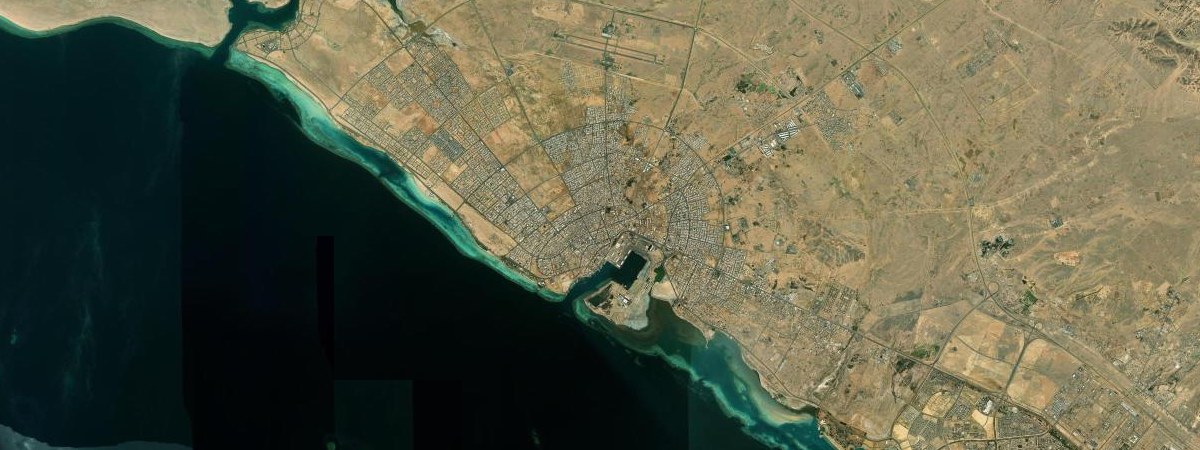
Saudi Aramco has significantly increased crude loadings at Yanbu, the kingdom's Red Sea export terminal, pushing toward a 5 million barrel-per-day target. This represents a dramatic ramp-up from pre-war baseline levels, as Riyadh diverts maximum crude volumes away from the Strait of Hormuz and Persian Gulf routes.
Yanbu's rapid expansion serves a dual purpose: maximize export volumes to Asia and Europe via unblocked Red Sea-Suez routes, and establish the Red Sea corridor as Saudi Arabia's primary crude export pathway during the Hormuz closure.
At 5 million bpd, Yanbu would represent roughly one-third of Saudi Arabia's total crude production, concentrated in a single port. This creates operational concentration risk: any attack on Yanbu could eliminate 5 million bpd from global supply—a supply shock larger than the entire Iranian production cut.
The surge requires substantial VLCC and Suezmax capacity redeployment. TankerMap data shows that 40-50 VLCCs are now operating on continuous cycles between Saudi Gulf fields via pipeline to Yanbu and Asian/European markets via the Red Sea-Suez route. Freight rates on these routes remain elevated despite recent peace-plan-driven oil price declines, as physical supply scarcity persists.
Yanbu's capacity ceiling is approximately 5-5.5 million bpd. Operating at this level leaves zero spare capacity for surge exports or inventory drawdowns. Any further Hormuz disruption must be absorbed by inventory depletion or demand destruction.